Go, Stop, Ppeok, Jjok, Ttadak: What Do These Words Mean?
When you play Go-Stop, the shouts never stop: “Go!”, “Stop!”, “Ppeok!”, “Ttadak!” To someone hearing them for the first time, it sounds like an alien language, and even longtime players sometimes wonder, “What exactly does that mean?” Today I’ll explain the terms you meet in HealingMatgo, one by one, in plain words .
The explanations below follow the HealingMatgo game rules . Rules can differ a little from home to home and village to village. Reliable records of where the words came from are rare, so the origins are shared as stories, as in “they say…”.
1. Go and Stop, the Biggest Fork in the Round
Go means “keep going,” and Stop means “stop here.” In this game, when your score reaches the finish score (7 pts) or more, you are asked, “Go or Stop?” If you choose Stop, the round is settled with you as the winner; if you choose Go, you take one more challenge.
The names are fun, too. They say the name “Go-Stop” itself joins “go” and “stop.” It is literally a game of shouting whether you go on or stop.
Go = one more time / Stop = I’ll end it here. There is also a word, Go-bak (Go Penalty), for trouble after you call Go and then don’t win. (If the player who called Go loses, the winner’s score is doubled.)
2. The Fun of Capturing Cards: Jjok, Ttadak, Sweep
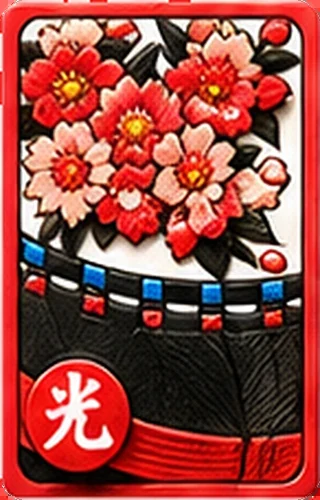
Two cards of the same month make a pair
|
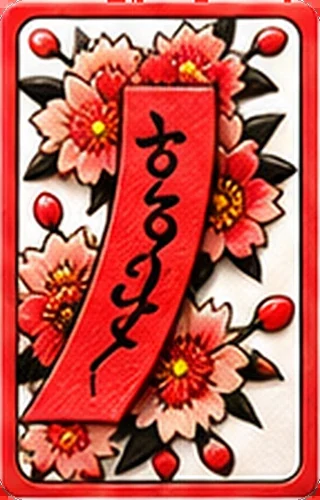
Cards of the same month pair up
|
- Jjok (kiss) — When you flip a card from the deck that matches the month of the card you played, and there is no card of that month on the table, you capture both at once. There is a bonus of taking one Junk from your opponent.
- Ttadak (double match) — There are two cards of the same month on the table, and you capture them all at once with the card from your hand and the card you flipped. They say it is called “Ttadak” because the cards seem to click into place with a tak, tak sound.
- Sweep (Pan-sseul-i) — You scoop up all the cards on the table so that the table is left completely empty. They say the name comes from the look of sweeping the board with a broom.
Jjok, Ttadak and Sweep are all welcome moments that come with “one Junk from your opponent.” Don’t miss them: the words Jjok! and Sweep! pop up in bold letters at the center of the screen.
3. The Frustrating Moments: Ppeok, Self-Ppeok, Whiff

When three cards of the same month pile up…
|
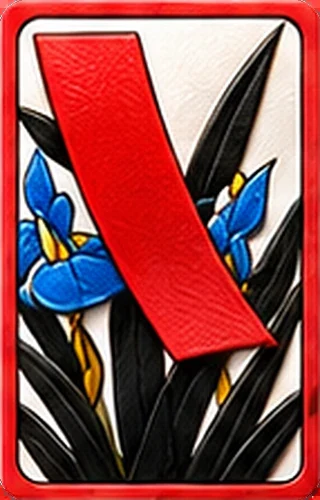
…that is a “Ppeok”
|
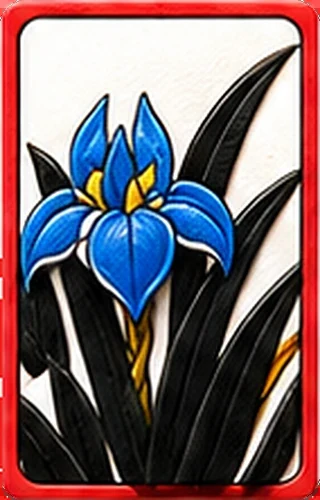
…capture it next time for a bonus
|
- Ppeok (stuck match) — The card you played, the card you flipped and a card on the table all end up as three cards of the same month, piled together. They say it’s called “Ppeok” because you can’t capture them and the round gets stuck. If a Ppeok happens on your very first play, it is called a “First Ppeok,” and the settlement is doubled.
- Capturing a Ppeok — If you capture the three piled cards, you take one Junk from your opponent.
- Self-Ppeok — You capture a Ppeok that you made yourself. You take two Junk from your opponent, a thrilling moment.
- Whiff (captured nothing) — A wasted effort: you can’t capture with the card you played, and you can’t capture with the card you flipped. In this game, there is also a “Whiff Win” rule: if you whiff 4 times, your opponent wins.
4. “Bak,” When the Score Doubles
When a “bak” is attached, the settlement doubles. The name changes depending on what the losing player failed to collect.
| Name | Meaning |
|---|---|
| Junk Penalty (Pi-bak) | The winner scored with Junk, and the loser collected 7 or fewer Junk. |
| Bright Penalty (Gwang-bak) | The winner scored with 3 or more Brights, and the loser has no Bright at all. |
| Animal Penalty (Meong-bak) | The winner has 5 or more Animals, and the loser has no Animal at all. |
| Go Penalty (Go-bak) | The player who called Go last lost. |
The score doubles even if you are missing just one of Junk, Brights or Animals, so it’s a good idea to check your own cards now and then during the round.
5. Big Moves That Turn the Round Around
- Shake — When you hold three cards of the same month and there is none of that month on the table, you are asked, “Shake?” If you do, the settlement doubles.
- Bomb — When you hold three cards of the same month and there is one of that month on the table, you play all three at once and capture four. It’s called a Bomb because it goes off with a bang.
- Chongtong (four of a month) — You are dealt four cards of the same month in your hand right at the start. In this game, that player wins immediately. It is so rare that they say it is “like a lottery round.”
- Godori (3 birds) — Collecting the three Animal (bird) cards of February, April and August. They say it is called “Godori” in the sense of catching three birds, but there are several theories about the exact origin of the name. In this game, it is +5 pts.
6. Why Are the Names So Funny?
The exact origins of most Go-Stop terms are not recorded in documents. They say many words stuck because the elders shouted them over the board. That is why the same word is passed down with slightly different meanings from village to village. Please read this article’s explanations as “this is how it is used in HealingMatgo.”
- Go = keep going, Stop = stop
- Ppeok = three cards of the same month pile up
- Jjok, Ttadak and Sweep = you capture and take your opponent’s Junk
- Pi-bak, Gwang-bak and Meong-bak = double if you fail to collect
- Chongtong = a rare round you win from the start