Red, Blue and Grass Ribbons: The Story of Hwatu Ribbons
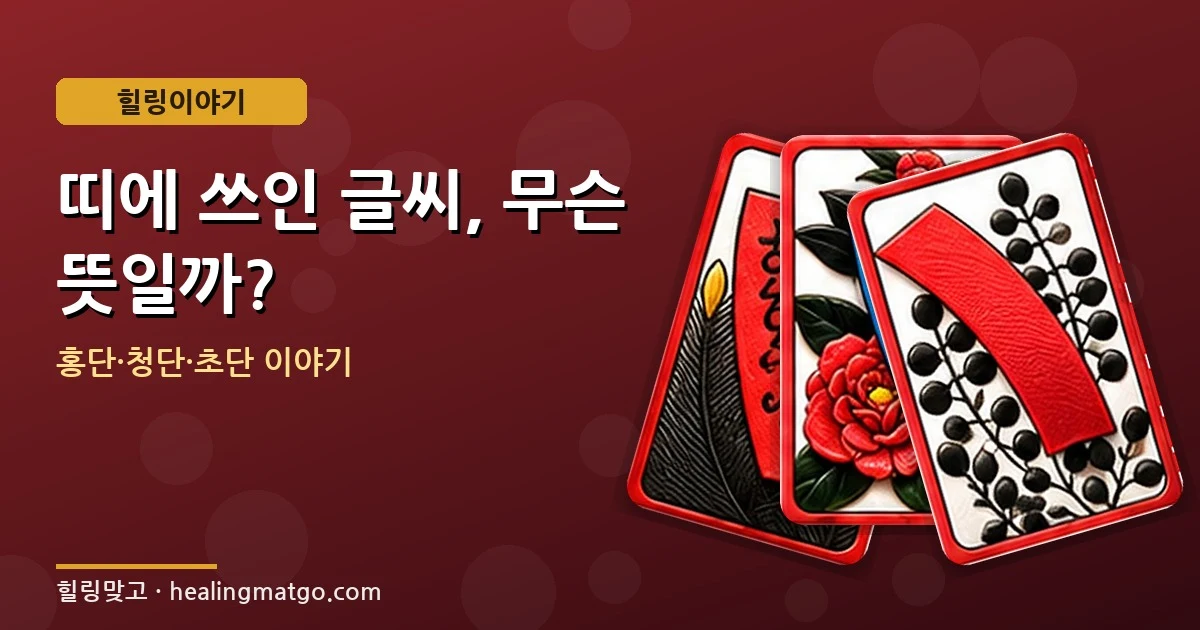
Hwatu ribbons come with three color stories: red, blue, and grass-green(?). Red Ribbons (Hong-dan), Blue Ribbons (Cheong-dan), Grass Ribbons (Cho-dan)! The names just roll off the tongue, don’t they? But have you ever wondered why these ribbons have strange writing on them?
Jan Red Ribbon
|
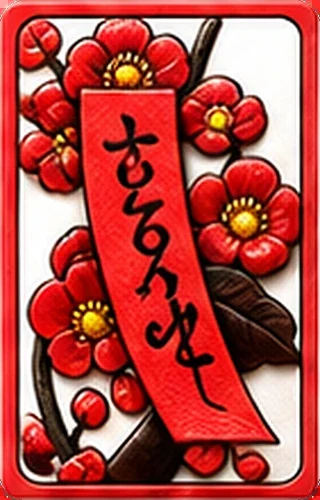
Feb Red Ribbon
|
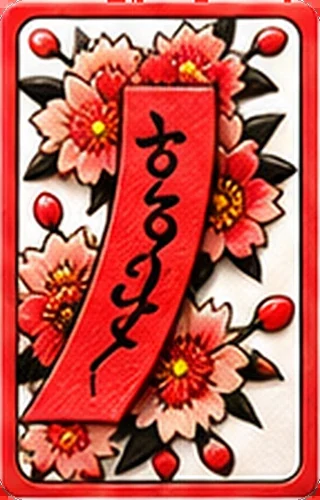
Mar Red Ribbon
|
Red Ribbons: the red ribbons of January, February and March
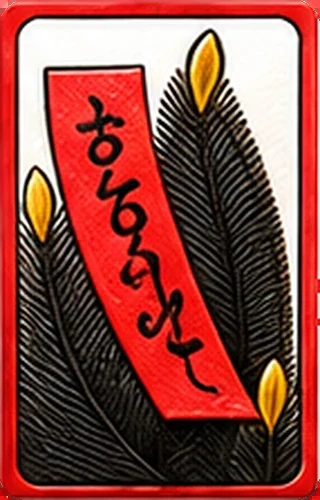
Red Ribbons are the three red ribbons of January (pine), February (plum blossom), and March (cherry blossom). On Japanese Hanafuda, the red ribbons of January and February are said to be written with ‘Akayoroshi (あかよろし)’ and the red ribbon of March with ‘Miyoshino (みよしの)’. The meaning has several interpretations: one view reads it roughly as ‘the red ribbon is good,’ and one explanation says Miyoshino comes from Yoshino, a place famous for cherry blossoms. Nothing is certain, so just take it as ‘so they say.’
There’s a story that in Korea, people didn’t know the Japanese writing, so they copied the shapes as if drawing a picture, and it turned into writing no one can read. In this game’s artwork too, the black writing on the ribbons looks like a code, doesn’t it? That’s exactly how it looks.
Blue Ribbons: the blue ribbons of June, September and October
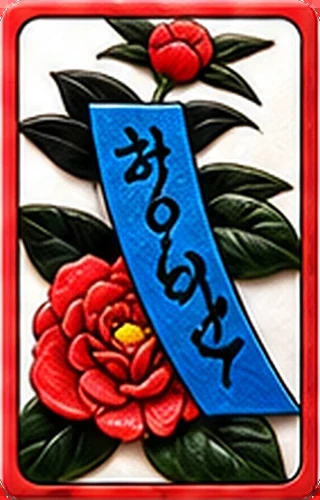
Jun Blue Ribbon
|
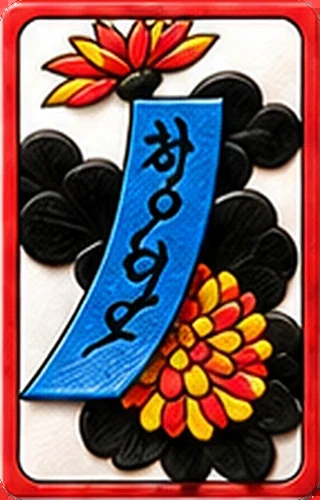
Sep Blue Ribbon
|
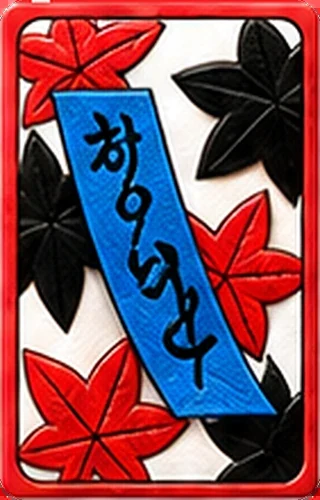
Oct Blue Ribbon
|
Blue Ribbons are the blue ribbons of June (peony), September (chrysanthemum), and October (maple). The blue ribbons of Japanese Hanafuda are said to have no writing, but the blue ribbons in this game’s artwork have black patterns that look like writing. Some editions draw it that way and some don’t, so comparing the different pictures of each edition is as fun as a hidden-picture game.
Grass Ribbons: the grass ribbons of April, May and July
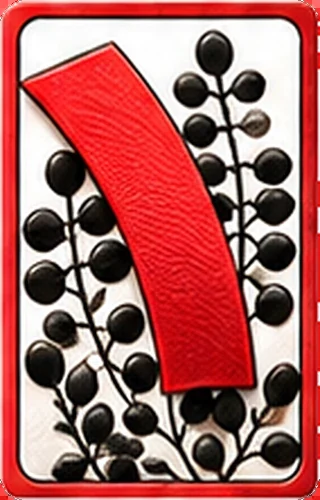
Apr Grass Ribbon
|
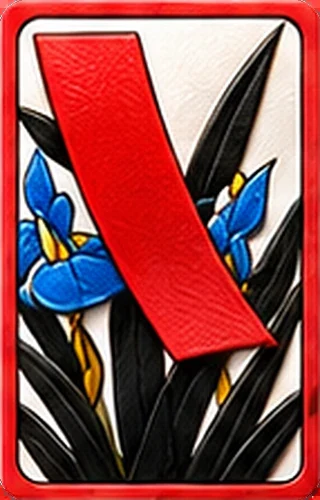
May Grass Ribbon
|
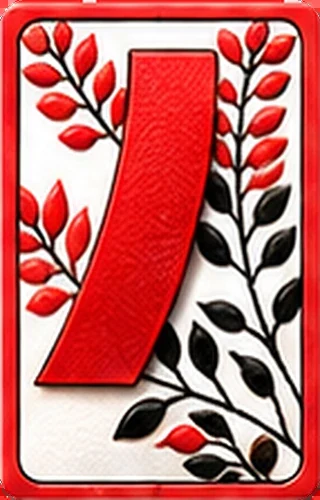
Jul Grass Ribbon
|
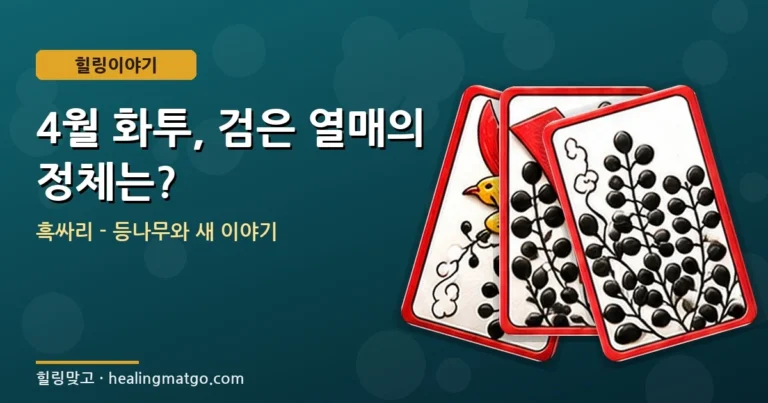
Grass Ribbons are the red ribbons of April (Black Clover), May (Iris), and July (Red Clover). They are red ribbons just like the Red Ribbons but have no writing, so they are easy to mix up. People say the ‘cho’ in the name is a Chinese character meaning grass. The way to tell them apart is simple: writing means Red Ribbons, no writing means Grass Ribbons!
An easy way to remember
| Name | Months | Ribbon color | In this game |
|---|---|---|---|
| Red Ribbons | Jan, Feb, Mar | Red ribbon + writing | Collect all 3: +3 pts |
| Blue Ribbons | Jun, Sep, Oct | Blue ribbon | Collect all 3: +3 pts |
| Grass Ribbons | Apr, May, Jul | Red ribbon, no writing | Collect all 3: +3 pts |
If the month numbers are hard to memorize, try this. 1-2-3 are Red Ribbons, 4-5-7 are Grass Ribbons, and 6-9-10 are Blue Ribbons. Think of it in order: ‘Spring is red, late spring and early summer are grass-green, and from the end of summer into autumn it’s blue.’
Scoring and missions in the game
- Ribbons score from 5 cards: the number of cards minus 4 (5 cards = 1 point).
- Collecting all 3 of the Red, Blue, or Grass Ribbons adds +3 points more.
- Missions: the missions to complete Red Ribbons / Blue Ribbons / Grass Ribbons make the score of a round you win x2, and ‘Red, Blue, Grass Ribbons’ (capture one of each) is x3.
There’s fun in wondering whether to focus on one color or collect a little of all three, one card at a time. If you collect ten Ribbons (3 each of Red, Blue and Grass, plus the December Ribbon), the Ribbon score alone is 6 points.
A little joke
"The Red Ribbons are so refined, they even have writing, but the Grass Ribbons have no writing and just a red face." Even when teased like this, the Grass Ribbons don’t mind. Collect them one by one and they’re hidden masters who can turn the round around.
Old tales and legends are told a little differently depending on the book and the region. This article retells the commonly known story in simple words.