February Plum Blossom and Red Ribbon: The Mystery of the Writing
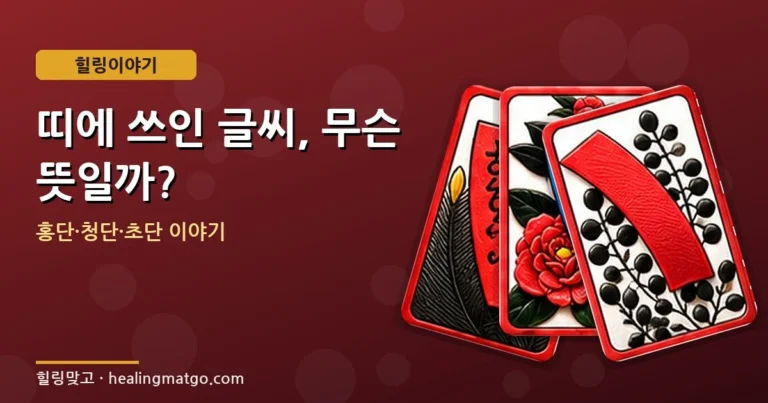
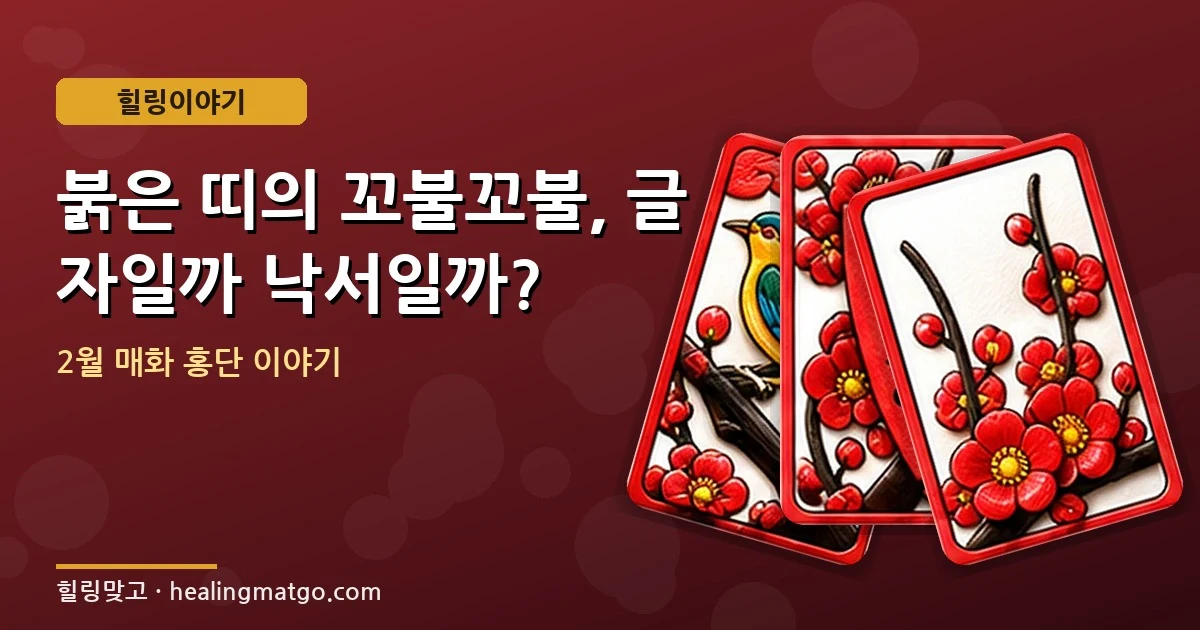
Open up the February cards and you’ll notice a bird on a plum branch, and a red ribbon hanging at a slant. But something is squiggled on that ribbon, isn’t it? Is it writing, or a doodle?
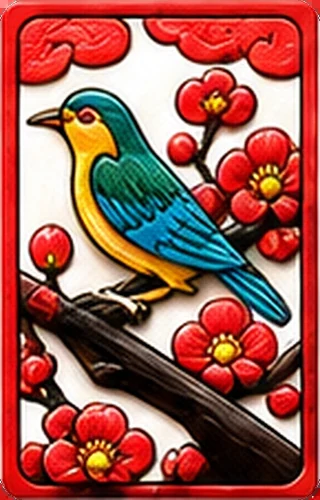
February Animal (bird)
|
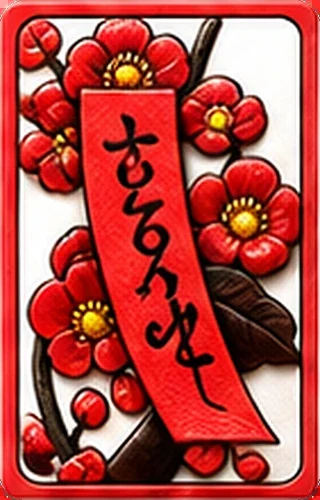
February Red Ribbon
|
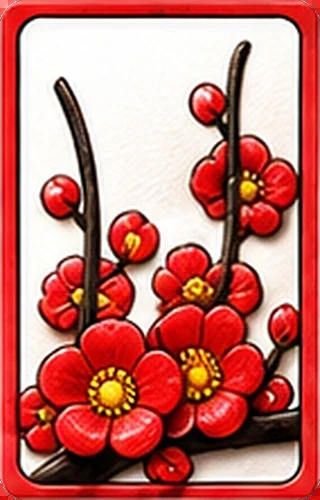
February Junk
|
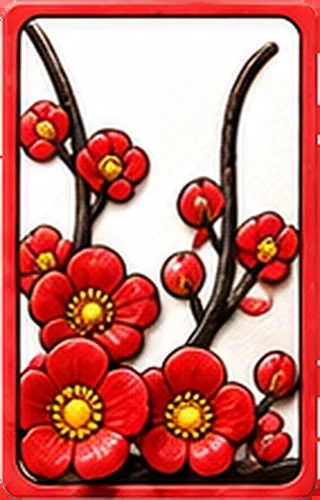
February Junk
|
Why Is the Plum Blossom February?
The plum tree is the first tree to flower at the end of winter and the start of spring. Before the snow has even melted, its buds open and tell us, “Spring is on its way.” It is a messenger of the season. In old paintings, too, the plum blossom often appeared as a flower that withstands the cold. That is why it is commonly said to have been chosen as the face of February in the lunar calendar.
The bird on the card sits on a plum branch. In Japanese Hanafuda, the plum blossom and the bush warbler are known to be a pair. In Korea, it is simply called “Maejo (梅鳥),” the plum bird.
The Four Cards of February
| Card | Type | Features |
|---|---|---|
| Plum blossom with a bird | Animal | Gather the three bird Animals of February, April and August to make “Godori” |
| Plum blossom with a red ribbon | Red Ribbon (Ribbon) | The three red ribbons of January, February and March make the Red Ribbons |
| Plum blossom (2 cards) | Junk | The most common card |
In February, one bird card becomes a piece of Godori, and one ribbon card becomes a piece of the Red Ribbons. That’s two assignments hanging on a single month. You can read about Godori in The Story of Godori.
What Is Written on the Red Ribbon?
The red ribbons of Japanese Hanafuda are known to carry old Japanese writing. It is often said that the January and February red ribbons carry a phrase meaning “akayoroshi” (“red is good”), and the March one carries the phrase “Miyoshino.” However, these readings differ a little from source to source.
As the cards moved over to Korean Hwatu, the writing gradually blurred, and on today’s cards it looks more like a squiggly pattern than letters. You can see that kind of shape on the February Red Ribbon picture in this game too. Some say that people copied it without knowing the meaning, and it turned into a similar-looking doodle.
Old tales and legends are told a little differently depending on the book and the region. This article retells the commonly known story in simple words.
The Fun of Making the Red Ribbons
When the three ribbons of January, February and March come together, you get the Red Ribbons. Together with the Grass Ribbons (April, May, July) and the Blue Ribbons (June, September, October), the ribbon stories are collected in The Story of Red, Blue and Grass Ribbons.
In this game, scoring is easy to follow if you read the Scoring rules article.