
Why Exactly 48 Hwatu Cards?
When you first held Hwatu cards in your hand, didn’t you wonder, “Why exactly 48? Wouldn’t 50 or 52 have been fine?” Today, let’s unravel the numbers and pictures hidden in this small deck.
48 Cards Is 12 Times 4
Hwatu is 12 months × 4 cards per month = 48 cards. There is one picture for each month from January to December, and four cards carry that picture. January is pine, February is plum blossom, March is cherry blossom… The cards are laid out as if you were turning the pages of a calendar one by one.
That’s why “flower-picture calendar cards” is a perfect description of Hwatu. The name “Hwatu (花鬪)” also uses the character for flower (花) and the character for fight (鬪).
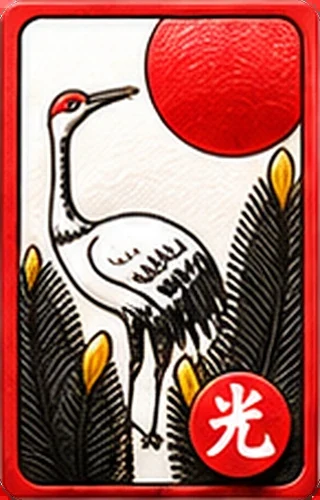
January Bright
|
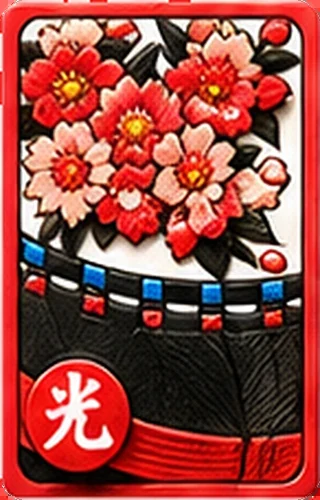
March Bright
|
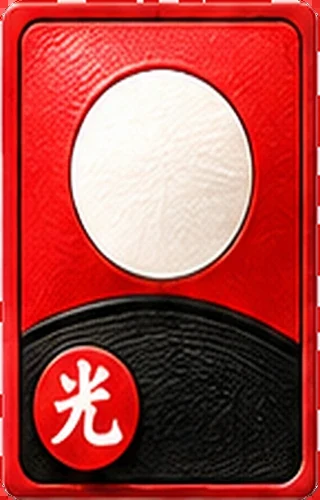
August Bright
|
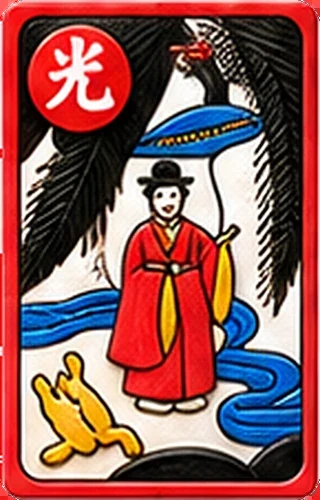
December Bright (Rain Bright)
|
The Twelve Months at a Glance
| Month | Picture | Month | Picture |
|---|---|---|---|
| Jan | Songhak (pine and crane) | Jul | Red Clover (boar) |
| Feb | Maejo (plum blossom and bird) | Aug | Gongsan (pampas grass, full moon and wild geese) |
| Mar | Cherry blossom | Sep | Chrysanthemum (sake cup) |
| Apr | Black Clover (wisteria and bird) | Oct | Maple (deer) |
| May | Orchid (Iris) | Nov | Paulownia (phoenix) |
| Jun | Peony (butterfly) | Dec | Rain (willow, person with umbrella, frog and swallow) |
The Cards Fall into Four Types
The 48 cards fall into four main types: Brights, Animals, Ribbons and Junk . In order of points, the Brights are the most precious cards.
- Bright (光): Sparkling cards marked with the character for “bright.” There are exactly 5, one each in January, March, August, November and December.
- Animal: Cards that show the “main character,” such as a bird, an animal or a sake cup.
- Ribbon: Cards with a red, blue or green ribbon. The Red, Blue and Grass Ribbons come from here.
- Junk: The most common cards. A Double Junk counts as two Junk cards.
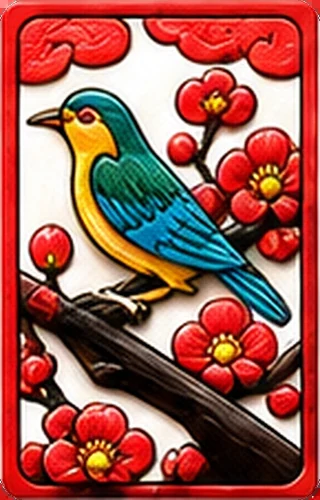
February Animal (bird)
|
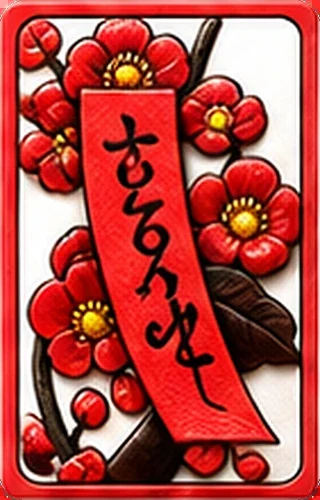
February Red Ribbon (Ribbon)
|
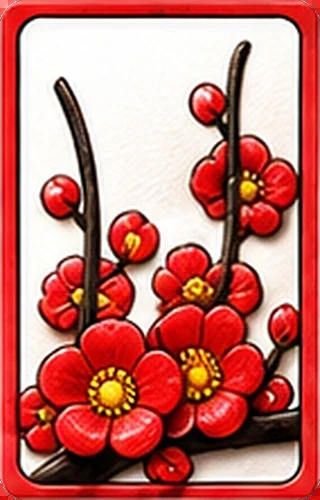
February Junk
|
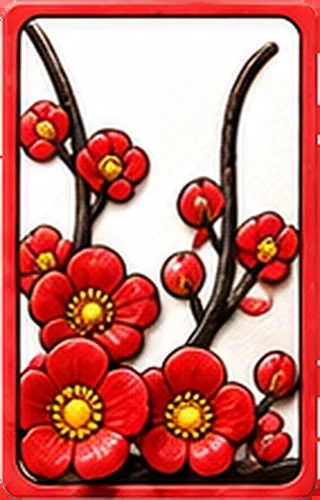
February Junk
|
Look at the four cards of February: a bird (Animal), a red ribbon, and two Junk cards. The makeup differs a little from month to month, so if you memorize it, the game becomes much easier to read.
Where Did Hwatu Come From?
Hwatu is known to have come from Japan’s “Hanafuda (花札).” Hanafuda is said to trace its roots to the 16th century, when Portuguese people brought Western playing cards to Japan. We’ll continue this story in The Roots of Hwatu.
It is known to have reached Korea after the opening of the ports. The exact time and route are debated among scholars. You can read about this in How Hwatu Came to Korea.
In a nutshell
- Hwatu = 12 months × 4 cards = 48 cards
- There are 5 Brights, in January, March, August, November and December
- It came from Hanafuda, and is known to have reached Korea after the opening of the ports